Artworks · 作品

Marks of memory,
traces of feeling

My visual practice spans drawing, painting, surrealism, and Chinese ink, tracing my ongoing journey of self-exploration, inner reflection, and transformation. Through art, I have used surreal imagery to give form to the unseen parts of life: dreams, memories, the unconscious, and the questions that emerge around death, destiny, growth, and becoming.

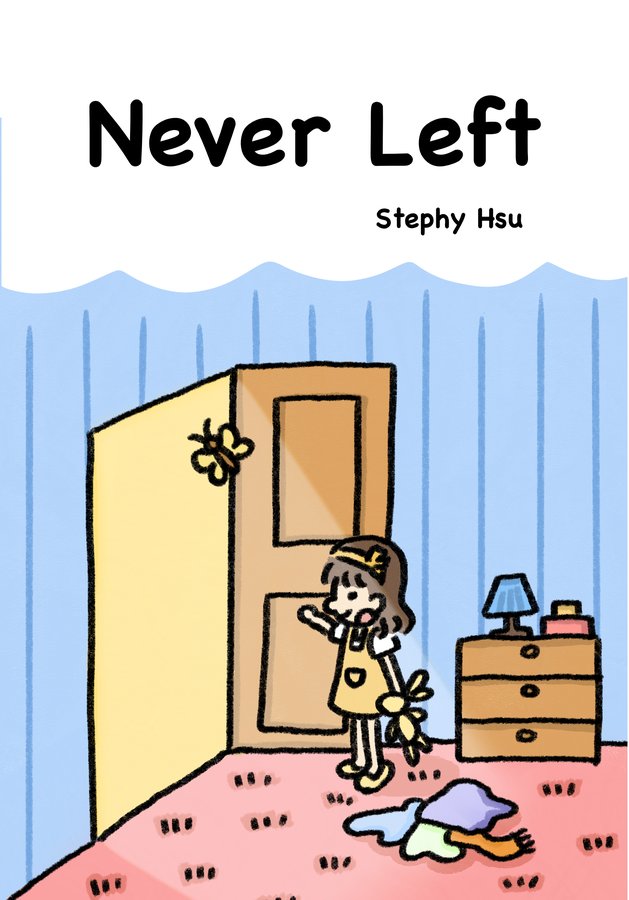
Never Left — illustrated children's book cover
Children's book Never Left Read the book →

My artistic practice has always existed alongside my clinical path. Through automatic drawing, surrealist exploration, and the slow, meditative discipline of Chinese ink and calligraphy, I have come to understand art-making as both a personal language and a pathway for healing. Art has been a form of sublimation for me — a way to transform inner experiences into images, symbols, and meaning.

This personal relationship with art is also what led me to art therapy. I believe in art therapy because I have experienced how art can hold what words cannot yet express, and how images can become bridges toward self-understanding, reflection, and change. My own growth through art continues to shape the way I understand its clinical potential: as a way to support others in making contact with themselves, their stories, and their capacity for transformation.

— I.

Transformation through art

A visual journey of memory, reflection, and becoming.

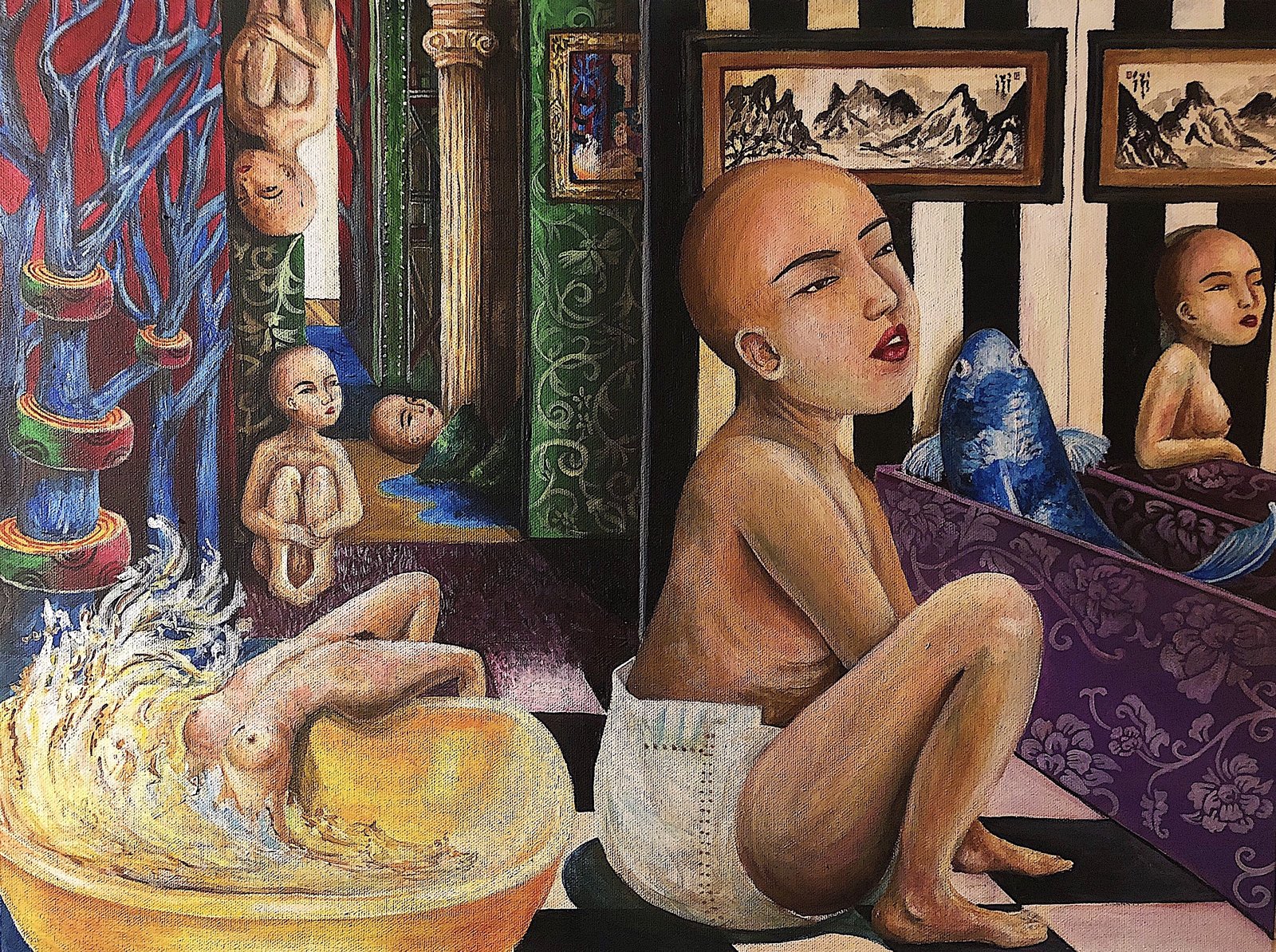
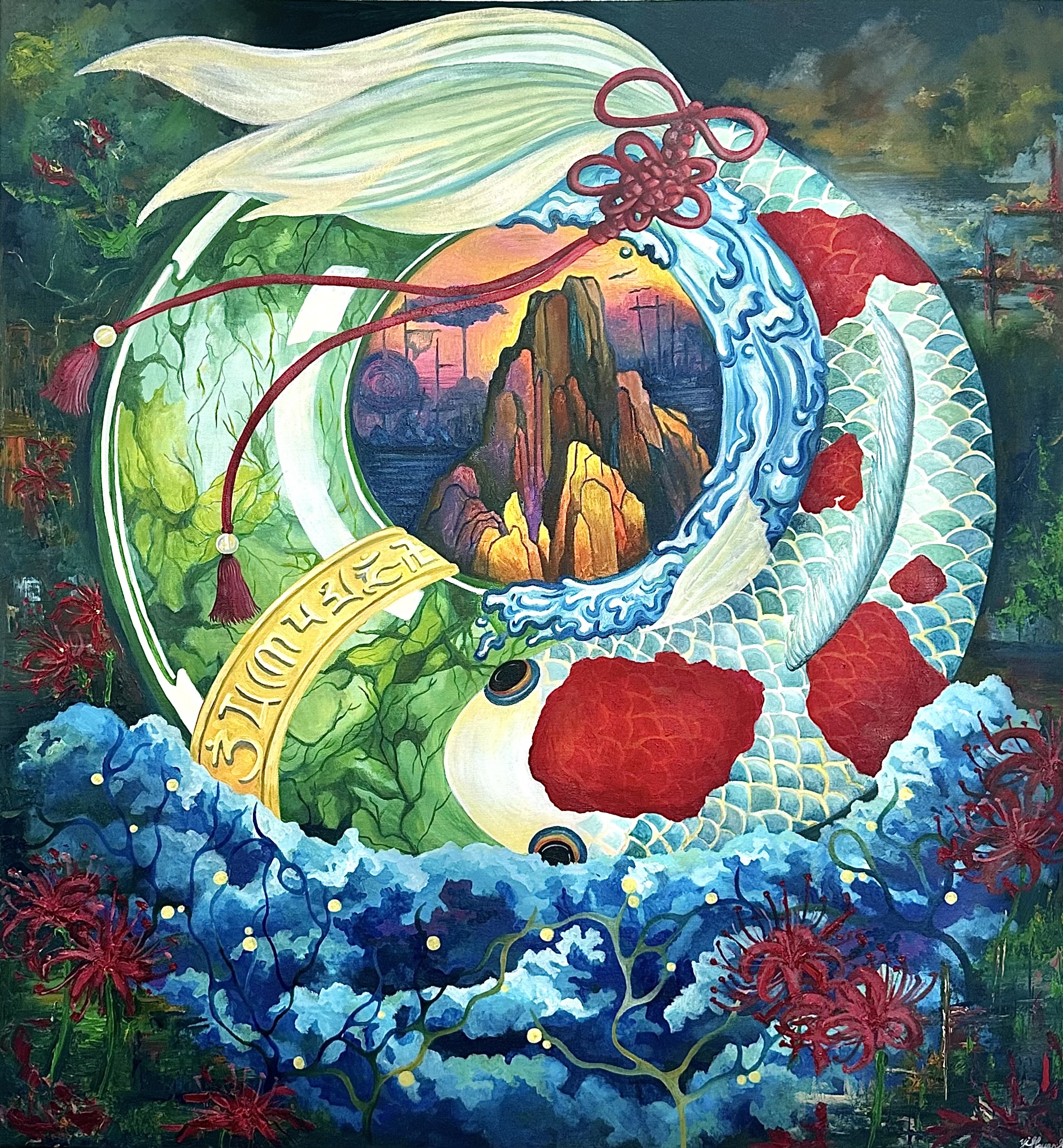
Attachment — oil painting by Stephy Hsu, 2025
2025

Attachment · 執念

Oil on canvas

The attachments of lives to come, of lives passed, of what was and what is — when released, the true self becomes visible. The wounded, the aching, the angry — when we loosen our grip, freedom arrives.

Simply said, yet not easily done. Even after breathing the scent of the bianhua and drinking Meng Po's soup of forgetting, the imprints remain deeply etched, traveling with us into this life. Though the jade may shatter, even that is transformation and rebirth. Let the six-eared pan chang knot remind us — toward the union of mind and matter.

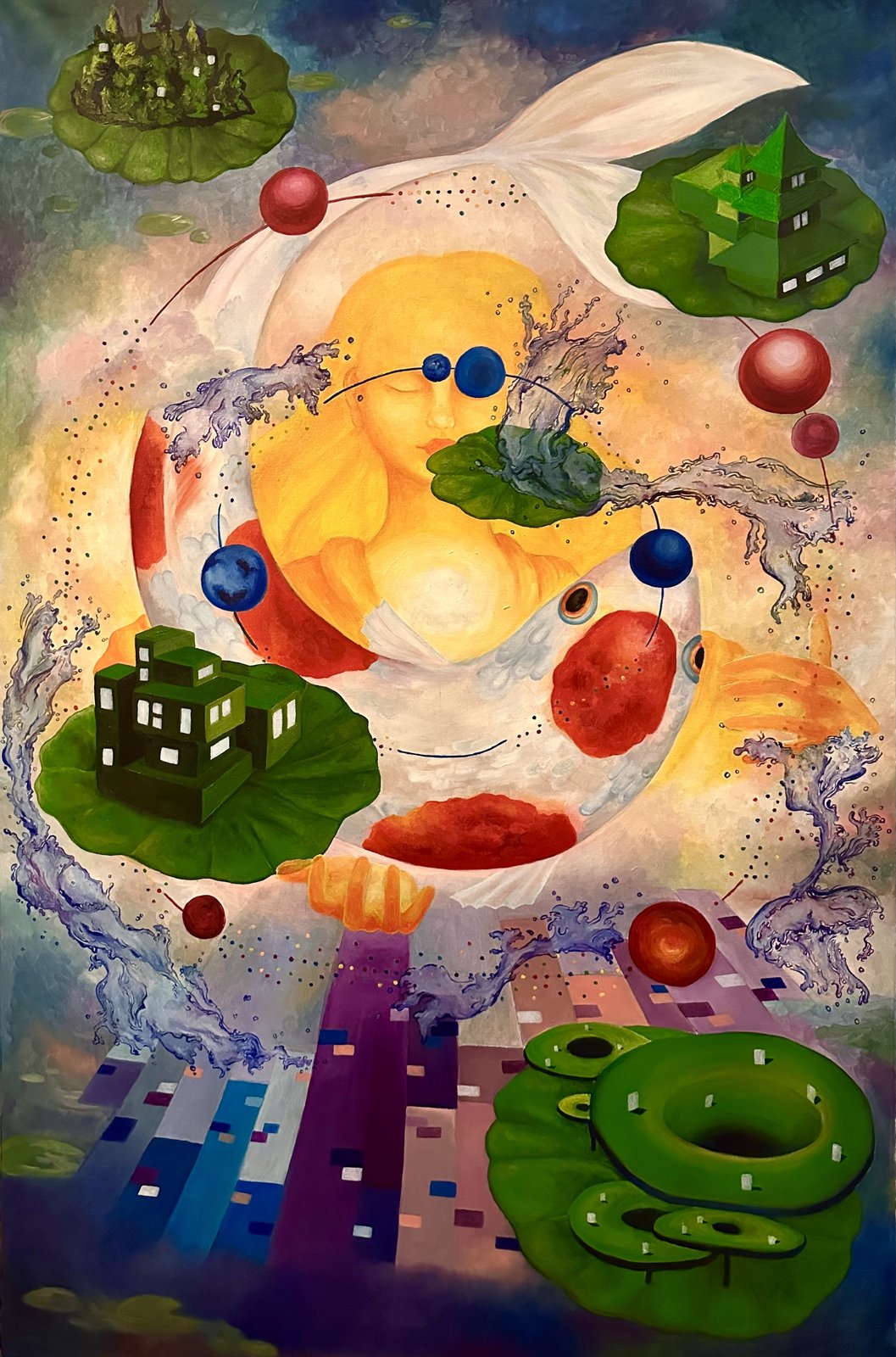
As Water 上善若水 — oil painting depicting a koi pond with branching forms
2024

As Water · 上善若水

Oil paint · 88 × 145 cm

This artwork reflects on existence, time, and the search for clarity within chaos. A tranquil pond sits at the center, where fish move in harmony, suggesting the simultaneous flow of past, present, and future. The vivid colors and branching forms represent the diversity and interconnectedness of life, while the surrounding patterns evoke the complexity of thoughts, truth, illusion, and self-discovery.

Inspired by the idea of 上善若水 — that the highest good is like water — the piece invites viewers to return to stillness, clarity, and truth amid the ever-changing movement of life.

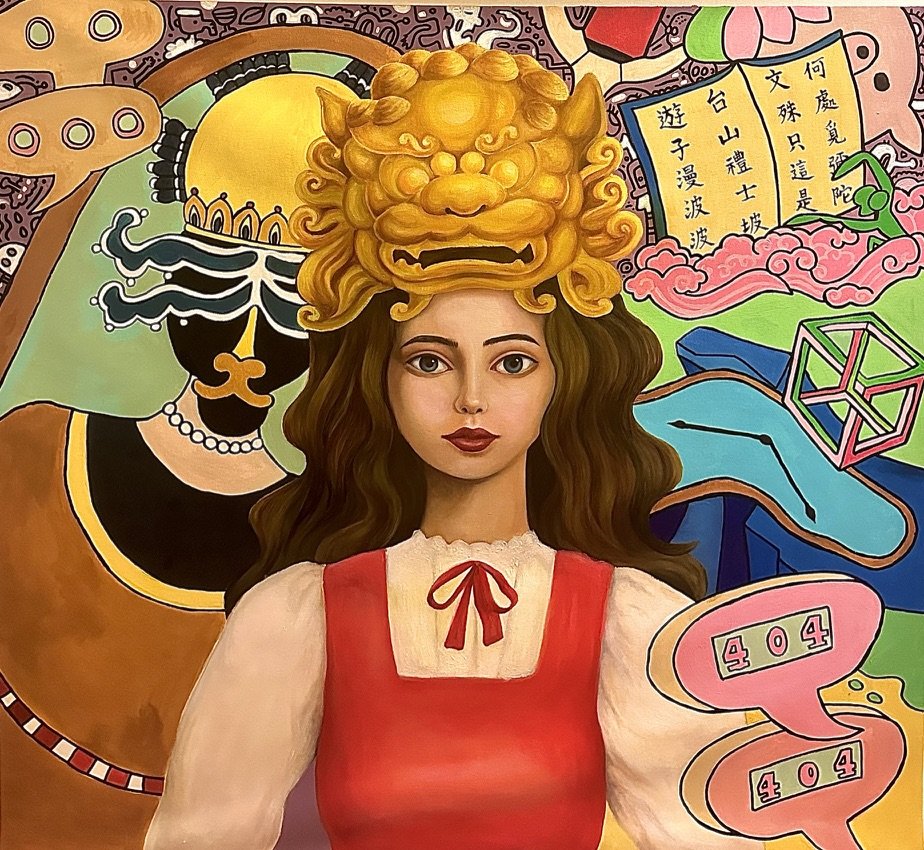
Ti・Xiang・Yong — acrylic and oil painting featuring a golden lion crown
2023

Ti・Xiang・Yong — Essence, Form, and Function

Acrylic and oil paint · 35 × 38 in

This painting is inspired by the Buddhist idea of the non-duality of nature and appearance—the understanding that essence and form are not separate.

In Huayan Buddhist thought, all things are interconnected and arise within the same realm of reality. Although appearances may differ, their fundamental nature is not separate from the whole. One well-known metaphor from the Huayan tradition is the Golden Lion: a golden lion appears to be a lion, yet its substance is gold. The same gold may be shaped into a lion, a rabbit, or any other form. The appearance changes, but the essence remains the same.

In this metaphor, gold is Ti 體—the underlying essence or substance.
The lion is Xiang 相—the visible form, image, or appearance.
The way essence manifests through form is Yong 用—function, expression, and living activity.

If we only look at form, we see a lion. If we return to essence, we see gold. But when we are able to see both at once, we move beyond the divide between emptiness and existence, essence and appearance, inner truth and outer form.

For me, Ti represents the unchanging ground of being; Xiang represents the shapes through which life appears—identity, emotion, memory, relationship, and story; and Yong represents the movement of essence through these forms. Appearance is not something to reject. Rather, it becomes the doorway through which essence can be encountered. Form allows essence to become visible, and essence gives form its deeper meaning.

This painting explores the possibility of seeing nature through appearance. We often become attached to external forms—labels, identities, roles, differences, and judgments. We separate the sacred from the ordinary, the pure from the impure, the self from the other. Yet when we look more deeply, even the most fragmented, contradictory, or ordinary moments may still contain the same fundamental nature.

Nature does not exist apart from appearance.
Appearance does not exist apart from nature.
Essence does not exist apart from function.
Function does not exist apart from essence.

This work is not about escaping the world or denying form. Instead, it is an attempt to perceive, within change, contradiction, and everyday experience, a deeper unity beneath all appearances. When we stop asking only what something appears to be, and begin to sense what moves through it, we may begin to see oneness within the many.
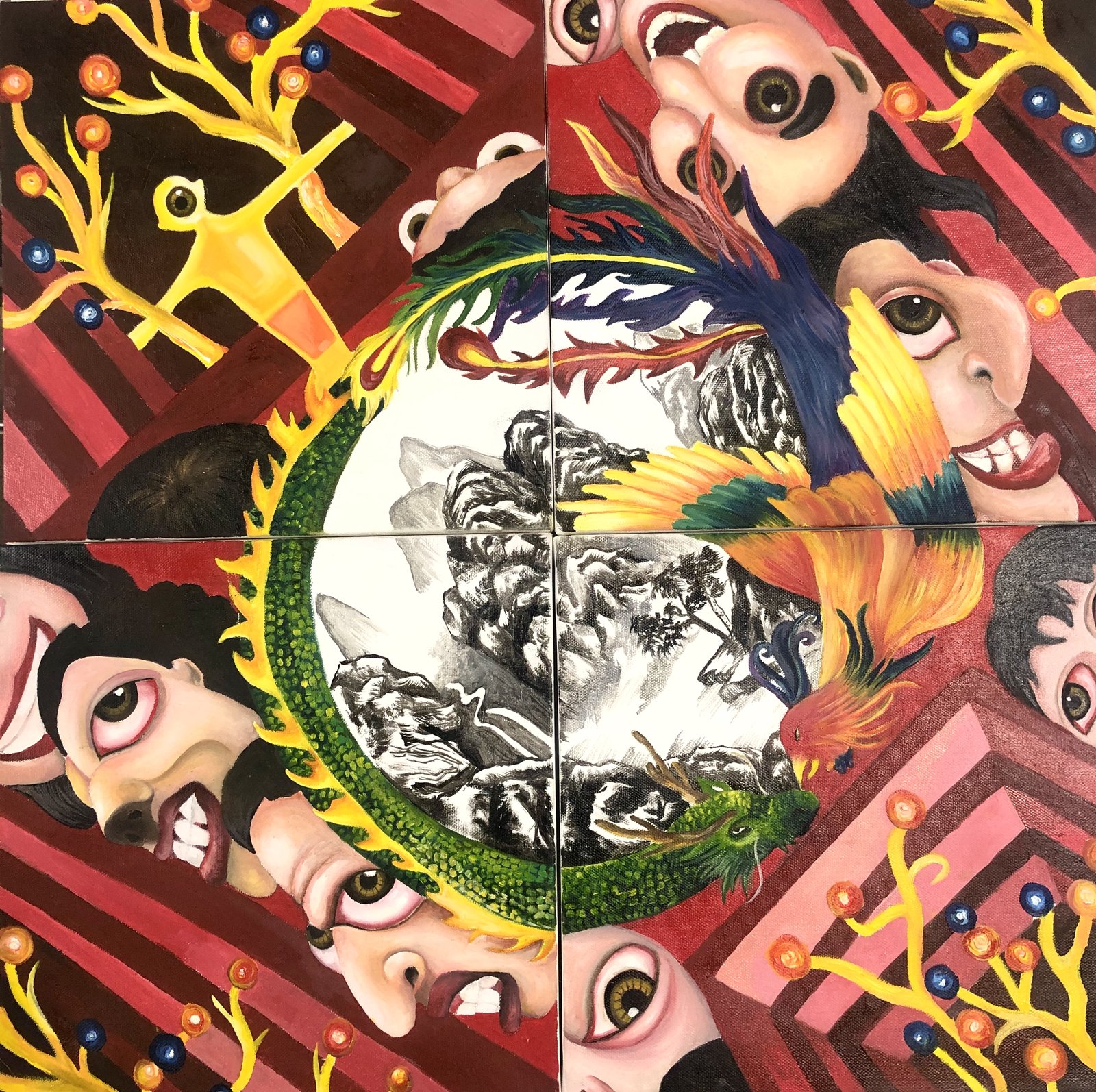
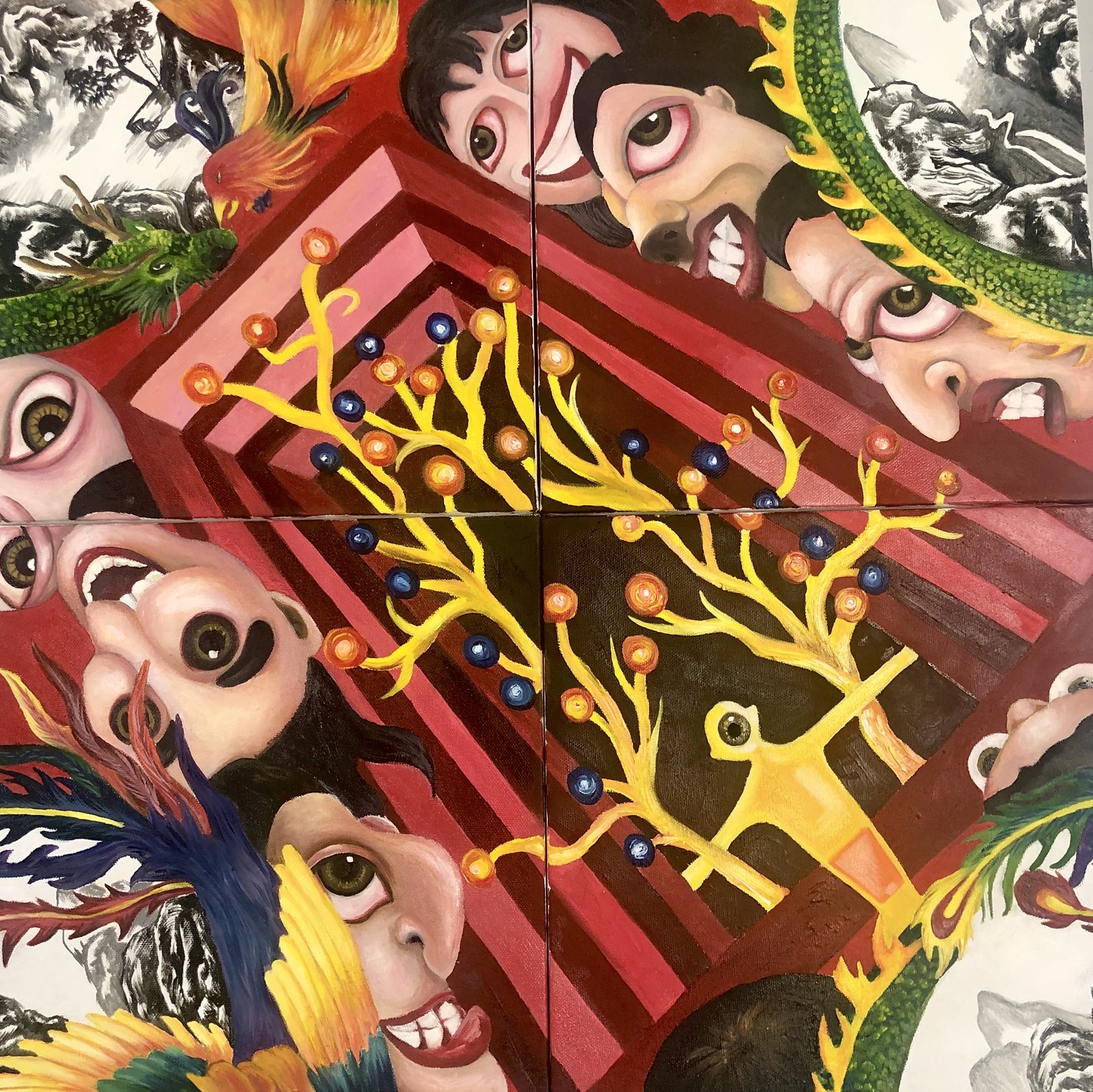
The Hidden Secret in the Maze — first panel, oil on canvas The Hidden Secret in the Maze — second panel, oil on canvas
2020

The Hidden Secret in the Maze

Oil on canvas · 22 × 22 in (four movable panels)

To fully experience this project, viewers need a pair of red-filter decoder glasses to unveil the hidden information beneath the painting. Without them, only the uncoded message can be perceived. The work plays with treasure hunting and challenges superstitious and cultural aspects of Asian culture.

Four movable canvases can be adjusted to create different scenes within the artwork. The uncoded message is displayed on the right, and a hidden musical note — Carmina Burana by Carl Orff — is incorporated.

In Chinese, the text conveys the cultural expectations and the hopes of parents, which can sometimes limit our potential. We often relinquish our dreams, individuality, and inner passions, conforming to the expectations of others.

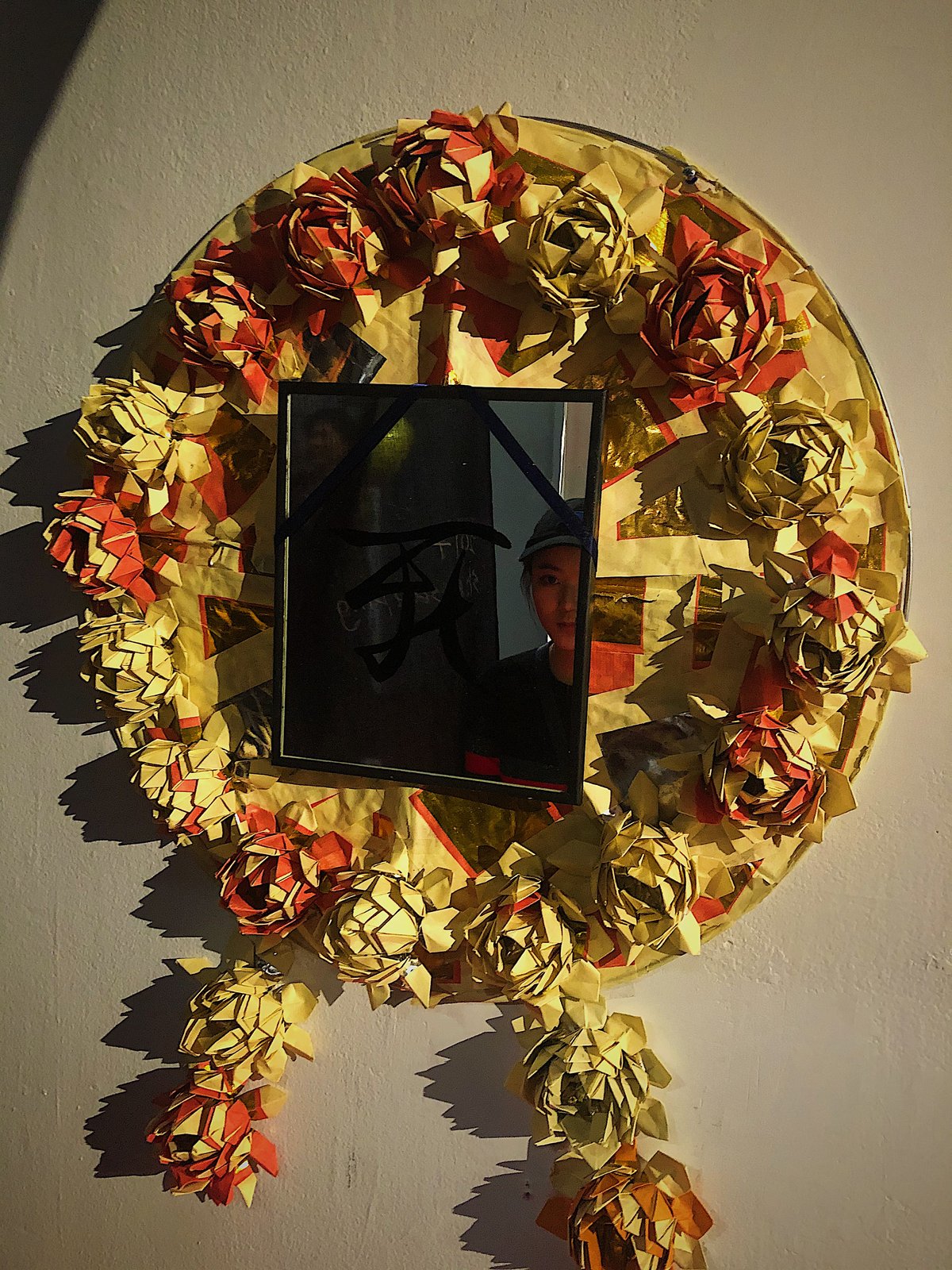
Grief & Bereavement — circular mirror surrounded by joss-paper lotuses
2020

Grief & Bereavement

Mirror · joss paper

This work explores grief, memory, and the relationship between death and life. Using joss paper — a ritual material traditionally burned as an offering for the deceased — the piece creates a reflective space for mourning and remembrance.

Inside the mirror, the Chinese character 死 (death) transforms into 生 (life) when the work is turned upside down, inviting viewers to reconsider death not as an ending, but as a continuation through memory, love, and lasting presence.

The Uncanny — surrealist acrylic painting with multiple faces and eyes
2020

The Uncanny

Acrylic on canvas · 18 × 24 in

This artwork draws inspiration from Freud's concept of the uncanny. In my perspective, the human psyche is not limited to a singular ID but is composed of multiple facets. Each can be invoked — some representing repressed impulses concealed deep within our memories, spanning across different spaces and centuries.

The present moment is an amalgamation of all these timelines, collectively shaping our unique identity.

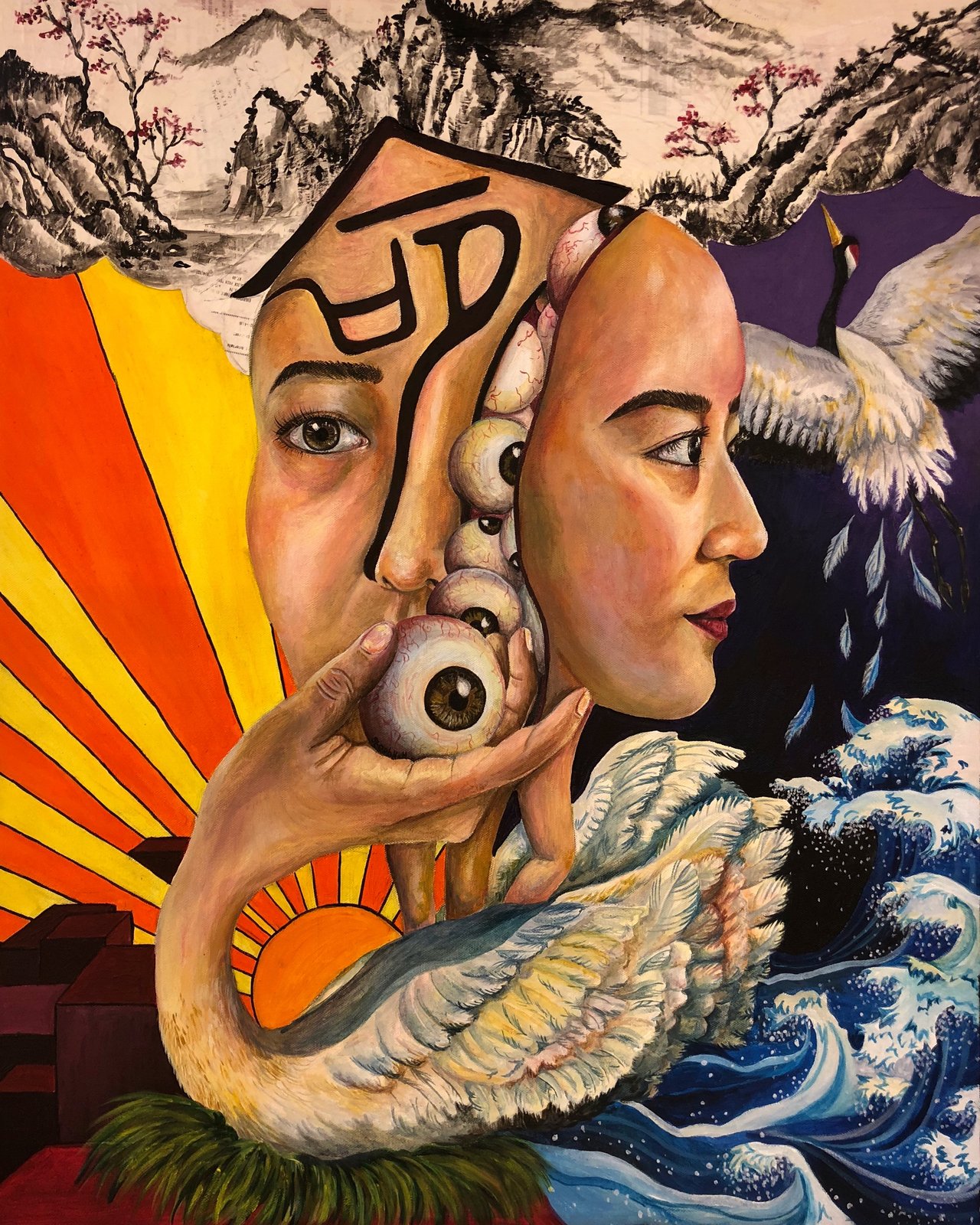
Destiny — surrealist self-portrait acrylic on canvas
2018

Destiny

Acrylic on canvas · 30 × 24 in

This self-portrait explores the complex interplay between willpower and destiny. It delves into the dualities within us — Yin and Yang — which often give rise to contradictions and dilemmas in choice-making. There is also the notion of an invisible force shaping our lives. The question arises: do we have the agency to shape our own identity, or should we entrust it to fate?

In this particular instance, I chose to be both an active observer and a participant in my life — making deliberate choices while remaining open to where those choices may lead, all while keeping a clear sense of purpose.

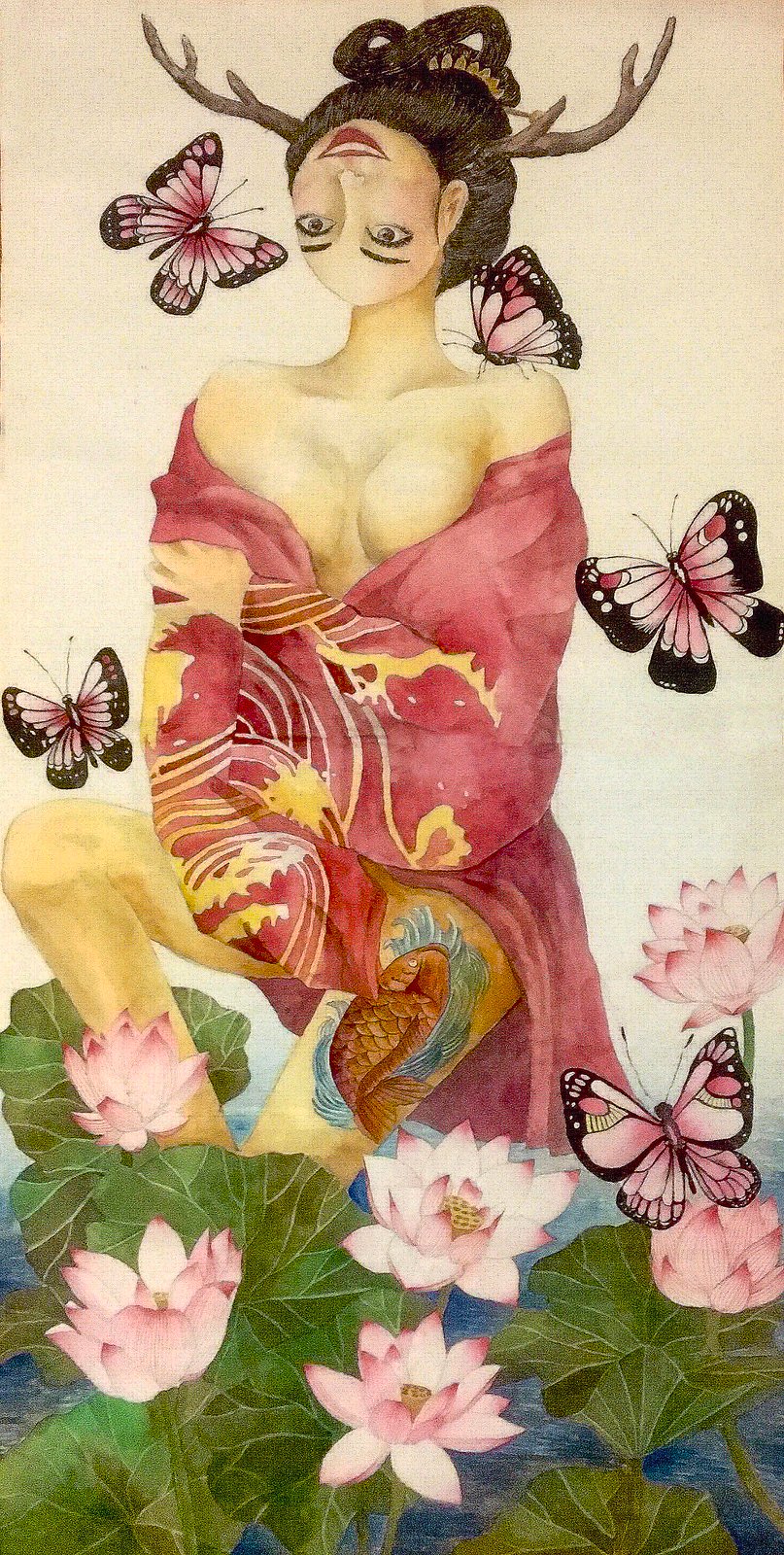
Purity — Chinese ink and watercolor painting on rice paper
2018

Purity

Ink and watercolor on rice paper · 30 × 56 in

This artwork fuses elements of Chinese traditional painting with surrealism. In Eastern culture, the lotus symbolizes purity, yet in this painting a woman is depicted half-naked and half-clad in a kimono, adorned with a leg tattoo, suggesting a more provocative stance. Butterflies symbolize liberation, while the face alludes to a facade or a mask. In Western culture, antlers are associated with the deer, revered as a holy creature.

The intent is to convey a sense of an anti-social psychological state — highlighting that individuals who appear pure and pristine on the surface may not necessarily hold the same sentiments within, akin to the enigmatic smile on the woman's face.

— II.

Exhibitions & shows

Group and solo exhibitions across New York, Hangzhou, and Los Angeles, from early training through recent collaborative shows.

2025
How Carbon Is Forgotten
Shang Art Museum · Hangzhou, China
2023
Art Affect
NYU Barney Building · New York
2022
FATA Organa Art Exhibition
New York
Apr–Jun 2022
Liminality Visual Art Exhibition
Wukong Media · New York & Los Angeles
May 2020
BFA Fine Arts Exhibition
Parsons SJDC Window Gallery · New York
Dec 2019
Systems Unfolding
Parsons The New School · New York
Oct 2019
Small Work Exhibition
Limner Gallery · New York
Apr 2017
Reveal — Personal Exhibition
EF International High School · New York
— III.

Awards & recognition

2017
Gold Key — Scholastic Art Awards (Surrealism)
National recognition
2017
Silver Key — Scholastic Art Awards (Comics)
National recognition
2017
Portfolio Competition — Second Place
Parsons The New School
2016 · 2017
Art Student of the Year
EF International High School, NY

Interested in commissioning work?

I take select commissions for portraits, ink works, and collaborative projects. Reach out to discuss.

Inquire about a commission